
Origins of the High Tech Movement
The roots of High Tech design trace back to experimental ideas in the nineteen sixties, particularly Cedric Price’s concept of buildings as adaptable frameworks rather than fixed objects. This thinking reached global prominence with the Centre Pompidou in Paris, where structural elements and services were pushed outward, freeing interior space for complete flexibility.
British architects such as Norman Foster, Richard Rogers, and Renzo Piano refined this philosophy, proving that exposed systems could be both functional and elegant. Their work laid the foundation for adaptable buildings designed to evolve with technology and use patterns.
Core Philosophy Behind High Tech Design
High Tech architecture treats buildings as living systems. Structure, circulation, and services are expressed honestly rather than hidden. This approach prioritizes adaptability, transparency, and performance.
Interiors are designed to be reconfigurable. Walls are non load bearing. Services are accessible. Spaces evolve without structural compromise. This philosophy directly informs modern interiors where technology, sustainability, and long term usability are central expectations.
Defining Characteristics of High Tech Interiors
Exposed Mechanical Systems
HVAC ducts, electrical conduits, plumbing, and data lines remain visible and intentionally designed. Color coding and clean alignment turn infrastructure into visual rhythm rather than clutter.
Structural Expression
Steel frames, diagrids, and trusses are left exposed, creating a strong architectural identity inside the space. Structure becomes both aesthetic and educational.
Transparency and Light
Glass dominates the material palette. Large glazed surfaces maximize daylight and create visual continuity between interior zones, improving both comfort and energy performance.
Modularity and Flexibility
Furniture systems, partitions, and service cores are designed to be movable. Interiors can be reorganized quickly to support changing needs, from residential layouts to commercial workflows.
Industrial Material Palette
Steel, aluminum, glass, exposed concrete, and composite panels define the aesthetic. These materials support durability, precision, and clean detailing.
Iconic References That Shaped the Language
Projects like the Centre Pompidou, the Lloyd’s Building in London, and the HSBC Headquarters in Hong Kong demonstrated how complex services could define architectural character. More recently, Apple Park and similar campuses show how high tech principles now integrate sustainability, comfort, and digital infrastructure.
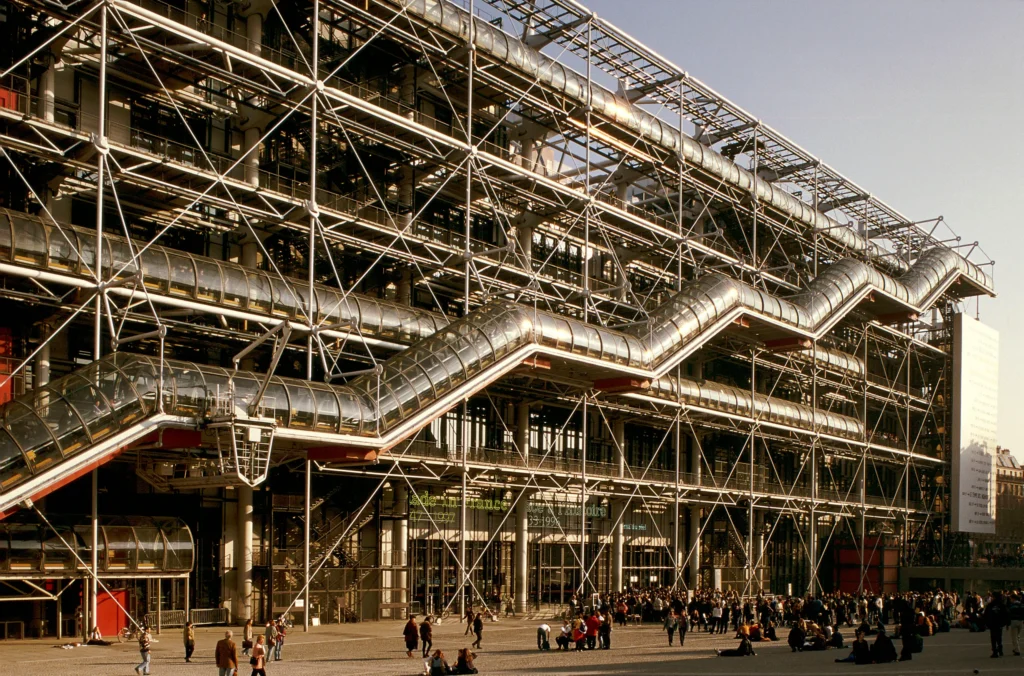


These precedents continue to influence how contemporary interiors are planned and executed across residential, commercial, and institutional sectors.
High Tech Design in Contemporary Interiors
Today’s interpretation of High Tech design is more refined and user focused. Technology is still visible, but it is carefully curated. Lighting tracks, exposed ducts, and smart systems are integrated with acoustic planning, thermal comfort, and spatial clarity.
In residential interiors, exposed ceilings paired with smart lighting and climate control systems create a futuristic yet livable environment. In offices and commercial spaces, visible infrastructure communicates innovation, transparency, and operational efficiency.
Design practices involved in interior design in Chittagong and interior design in Bangladesh increasingly apply High Tech elements in modern apartments, tech offices, and mixed use developments where adaptability and smart integration are key client priorities.
Sustainability and Performance Benefits
High Tech architecture aligns naturally with sustainable design. Exposed systems simplify maintenance and upgrades. Prefabricated components reduce construction waste. Flexible layouts extend building life cycles by allowing spaces to evolve rather than be demolished.
Many high tech inspired interiors achieve significant energy savings through daylight optimization, efficient HVAC distribution, and smart monitoring systems.
Strategic Value for Clients
High Tech interiors signal progress, precision, and confidence. They are particularly effective for clients who value innovation, future readiness, and architectural clarity. In competitive urban markets, these interiors differentiate properties by combining visual impact with operational intelligence.
The most successful projects apply High Tech principles selectively, using exposed systems as focal elements while maintaining comfort and coherence throughout the space.
Final Perspective
High Tech architecture transformed buildings by turning infrastructure into identity. Its influence on interior design continues to grow as technology becomes inseparable from daily living. When executed with discipline, High Tech interiors deliver clarity, adaptability, and a distinctly modern character that responds directly to how people live and work today.