
Baroque and Rococo Ornamentation: Dramatic Curves, Gilding & Theatrical Spaces
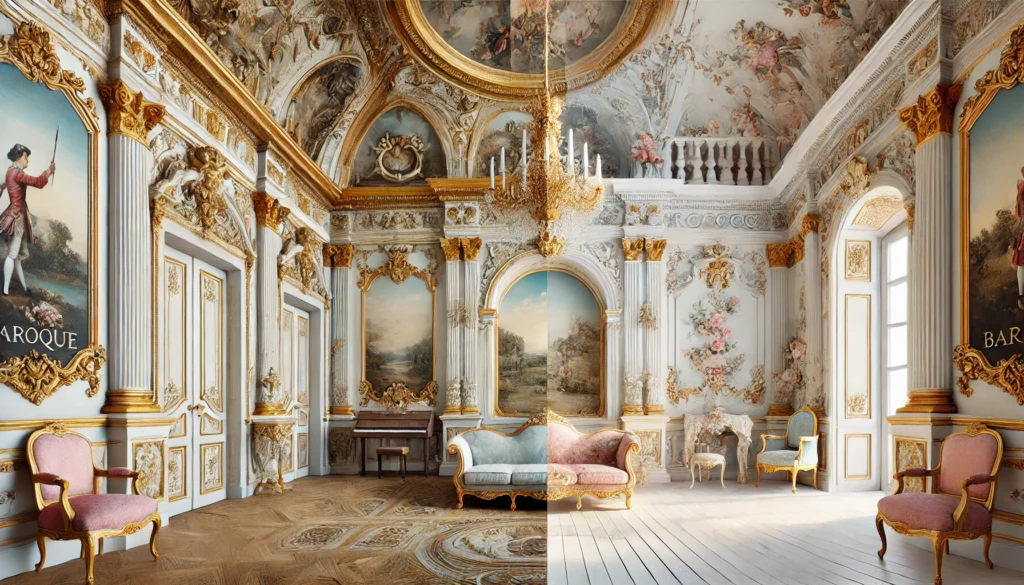
Baroque and Rococo ornamentation stands as one of the most visceral chapters in the history of interior design. These styles transformed spaces into theaters of emotion, where every curve, gleam of gold, and play of shadow conspired to move the viewer. What began as a bold assertion of power in vast palace halls evolved into delicate, intimate expressions of pleasure and wit.
For those drawn to expressive interiors; whether outfitting a Dhaka residence, a Chattogram hotel lobby, or a private salon; these historical movements offer lessons in creating environments that stir the senses. Baroque architecture demands attention with its monumental sweep; Rococo interiors whisper seduction through asymmetry and lightness. Together, they remind us that design can be as much about feeling as it is about function.
Overview of Baroque and Rococo periods
Baroque emerged in late 16th-century Italy as a counterpoint to the measured calm of Renaissance forms. By the early 17th century, it had spread across Europe, fueled by the Catholic Church’s desire for art that overwhelmed the senses and reaffirmed faith amid Reformation doubts. Interiors became stages for drama: soaring vaults, twisted columns, and undulating surfaces that seemed to pulse with energy.
Rococo followed in the early 18th century, primarily in France, as a reaction to Baroque’s heaviness. It softened the edges, introducing shell-like motifs, playful asymmetry, and pastel palettes suited to aristocratic salons. Where Baroque projected grandeur, Rococo cultivated charm—yet both shared a profound commitment to ornamentation as the soul of space.
Their role in shaping expressive interior design cannot be overstated. These styles elevated decoration from mere embellishment to structural poetry, influencing everything from gilded interiors to theatrical spaces that still captivate today.
The Emergence of Baroque Design
Baroque design crystallized amid profound cultural shifts. The Thirty Years’ War ravaged Europe, while absolute monarchs like Louis XIV sought to project unassailable power. Architecture became a tool of propaganda, with interiors designed to awe visitors and embody divine order on earth.
Historical and cultural context
In Rome, architects like Gian Lorenzo Bernini blurred the line between sculpture and space, filling churches with swirling marble and dramatic light. Versailles under Louis XIV epitomized this on a national scale: endless mirrored galleries and sculpted gardens reinforcing the Sun King’s radiance. Across Catholic Europe—Spain, Austria, southern Germany—similar impulses drove the creation of palace interiors and ecclesiastical spaces brimming with movement.
Protestant north Europe adopted a more restrained Baroque, but the core impulse remained: to evoke emotion through scale and ornament.
Desire for emotional impact and grandeur
Unlike the intellectual poise of classical proportion, Baroque sought visceral response. Interiors were choreographed to guide the eye upward, around corners, and into infinity. This emotional charge made spaces feel alive, almost breathing—a quality that resonates in contemporary ornamental design seeking to transcend the mundane.
Dramatic Curves and Spatial Movement
Baroque broke free from straight lines, introducing curves that imparted a sense of perpetual motion. Walls bowed outward, staircases spiraled like helices, and ceilings cascaded in waves of plaster.
Curved walls, staircases, and ceilings
Consider the Scala Regia in the Vatican: Bernini’s staircase compresses and expands space through convex and concave walls, drawing visitors inexorably forward. Ceilings, too, rejected flatness—undulating ribs and pendentives created a sense of upward thrust, as if the room aspired to heaven.
In palace interiors, these curves unified disparate elements, turning rigid boxes into fluid experiences.
Sense of motion and fluid spatial planning
Movement became architectural vocabulary. Doorways framed vistas that twisted into adjoining rooms, creating enfilades alive with directional energy. This fluidity influenced spatial planning profoundly: no corner felt static; every transition promised revelation.
Visual rhythm within interiors
Rhythm emerged from repeating motifs—acanthus scrolls, cartouches, and volutes—that linked floor to ceiling. This orchestrated flow prevented ornament from overwhelming, instead propelling the gaze like a musical phrase.
Light, Shadow, and Theatrical Atmosphere
Light in Baroque and Rococo interiors was no accident; it was the director’s cue. Strategic placement amplified drama, turning surfaces into luminous events.
Strategic use of natural and artificial light
Hidden windows and clerestory openings raked light across textured walls, casting shadows that accentuated relief. At night, candelabra and early chandeliers multiplied flames, their reflections dancing in polished surfaces.
Contrast and depth in interiors
High contrast defined the mood: deep shadows against gilded highlights, matte stones yielding to shimmering silks. This chiaroscuro effect lent depth, making even modest rooms feel cavernous and profound.
Psychological impact of lighting
The result was theatrical spaces that manipulated perception—spaces that felt larger, more sacred, or more intimate by design. For a modern interior design firm in Chittagong crafting hospitality venues, this mastery of light remains a blueprint for evoking wonder without gimmicks.
Gilding and Surface Ornamentation
Gold was Baroque’s signature, applied with abandon to assert wealth and divinity. Rococo refined it into delicate tracery.
Use of gold leaf and decorative finishes
Gold leaf burnished on plaster, wood, and canvas caught light like liquid fire. Patinas of verdigris or bronze provided counterpoint, while bole (clay undercoat) allowed subtle color shifts.
Wall panels, moldings, and ceiling details
Walls dissolved into boiserie—carved panels alive with foliage, shells, and mythical beasts. Ceilings erupted in quadri riportati, painted illusions of architecture framing frescoes. Moldings swelled and receded, blurring structure and decoration.
Relationship between structure and decoration
Ornament was not applied; it was grown from the architecture. Columns twisted into solomonic forms, capitals sprouted flora—this organic fusion made surfaces feel tectonic, not tacked-on.
Baroque Interiors: Grandeur and Power
Baroque interiors served power’s theater, from Vatican corridors to Habsburg ballrooms.
Palace halls, churches, and ceremonial spaces
The Hall of Mirrors at Versailles orchestrated 357 mirrors to double infinity, amplifying Louis XIV’s glory. Churches like St. Peter’s fused nave and dome in a crescendo of marble and gilt.
Monumental scale and formal layouts
Scale awed: double-height galleries, colossal orders, ceilings that demanded neck-craning awe. Layouts followed axes of approach, building to climactic saloons.
Emotional storytelling through space
Each room narrated—public antechambers yielded to private cabinets, ornament crescendoing with intimacy. This spatial narrative evoked triumph, piety, or sovereignty.
Rococo Interiors: Elegance and Intimacy
Rococo marked a pivot toward domestic delight, born in Louis XV’s Versailles petits appartements.
Shift toward lighter, more playful forms
Forms lightened: C- and S-curves replaced Baroque’s drama with whimsy. Asymmetry introduced caprice—mirrors tilted, furniture cabriole-legged.
Pastel colors, asymmetry, and delicacy
Pale blues, pinks, and ivories suffused spaces with dawn-like glow. Shells, rocks, and chinoiserie motifs evoked nature’s fantasy.
Domestic and salon interiors
Salons like the Hôtel de Soubise in Paris epitomized this: intimate oval rooms where conversation flowed amid frothy stucco. Scale shrank to human proportions, ornament caressing rather than commanding.
Furniture, Decorative Arts, and Interior Detailing
Furniture embodied the styles’ essence, curving in sympathy with architecture.
Furniture curves and ornamentation
Baroque commodes heaved with bombé fronts; Rococo console tables scrolled like waves. Carving mimicked walls—giltwood frames echoed plaster motifs.
Mirrors, chandeliers, and art integration
Mirrors expanded space illusionistically, their frames integral to wall compositions. Chandeliers dripped rock crystal, refracting light into rainbows. Paintings nestled into stucco frames, inseparable from the ensemble.
Craftsmanship and luxury materials
Master craftsmen—ébénistes, bronziers—deployed mahogany, tortoiseshell, and ormolu. Marquetry and lacquer added intimacy, every joint a testament to hand skill.
Influence on Contemporary Interior Design
Baroque and Rococo persist not as pastiche, but as inspirations for emotional resonance.
Modern reinterpretation of Baroque and Rococo elements
Designers distill curves into sleek metalwork, gilding into matte accents. Theatrical lighting recurs in layered LEDs grazing textured walls.
Selective use of curves, ornament, and theatrical lighting
In luxury hotels or residences, a single rocaille mirror or curved banquette injects vitality. An interior design firm in Chittagong might deploy these selectively, pairing gilt with matte concrete for grounded drama.
Contemporary historical luxury interiors balance exuberance with restraint—curves softening modernism, ornament underscoring craft.
Balancing historical richness with modern simplicity
The key lies in editing: one dramatic chandelier amid clean lines, or asymmetrical shelving echoing Rococo play. This yields spaces rich in mood yet livable, honoring history’s verve.
Conclusion
Baroque and Rococo ornamentation endures because it speaks to our craving for spaces that move us—dramatically, playfully, profoundly. From the surging energy of gilded interiors to the delicate curl of rococo interiors, these styles mastered emotion through form, light, and craft.
In an age of minimalism, their legacy urges us to infuse interiors with rhythm and delight. Curved forms in design, strategic shadow, artisanal detail—these tools craft environments that linger in memory, proving that true luxury resides in the thrill of experience. Whether scaling grandeur or savoring intimacy, their principles continue to shape interiors of depth and soul.