
Arts & Crafts and Art Nouveau: Handcrafted Rebellion Against Mass Production
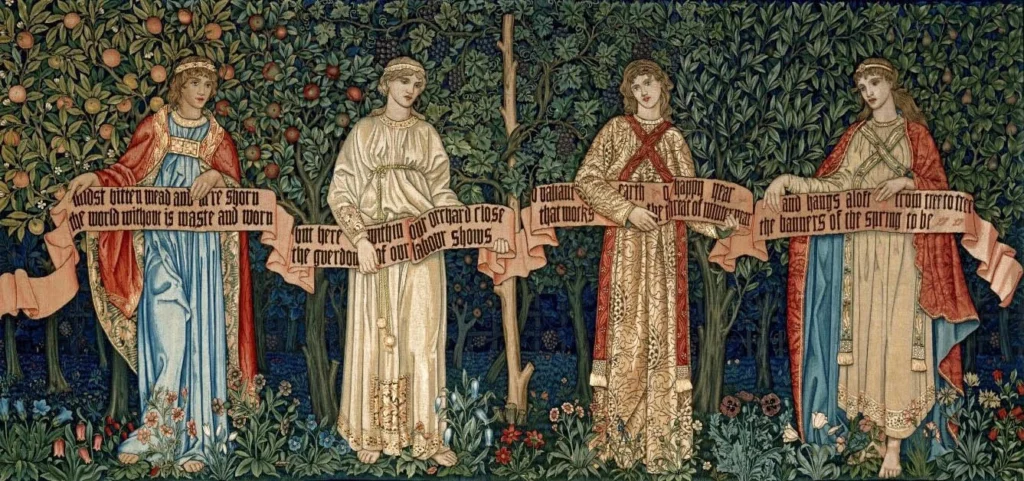
The late 19th century marked a turning point in how we understood making things. Factories churned out identical chairs, wallpapers, and lamps at unprecedented speed, flooding homes with cheap uniformity. Yet amid this mechanical tide, a quiet rebellion stirred: designers who believed beauty should come from human hands, not assembly lines. Arts & Crafts and Art Nouveau arose not as mere styles, but as philosophies demanding material truth, artistic conviction, and a return to nature’s honest forms.
These movements speak directly to anyone today who tires of disposable decor—architects shaping thoughtful homes in Dhaka or Chittagong, homeowners seeking originality, or clients commissioning spaces that honor craft over convenience. In an era of digital fabrication, their insistence on handcrafted design remains a potent reminder that interiors can carry the warmth of individual creation.
Background of late 19th-century industrialization
The Industrial Revolution’s second wave transformed Europe and America. Steam-powered machines enabled mass production, lowering costs but eroding quality. William Morris, a pivotal figure, decried “the injuriousness of machinery” in his 1851 lecture, arguing it deskilled workers and dulled sensibilities. Homes filled with shoddy imitations of historical styles—machine-stamped Gothic arches, aniline-dyed fabrics—left a cultural void.
This dissatisfaction fueled a broader critique. John Ruskin and Morris saw design as moral act: good work ennobles both maker and user. Across Britain, the continent, and eventually the world, this ethos birthed movements that prioritized the workshop over the factory.
Growing dissatisfaction with mass-produced design
By the 1880s, architects and artists railed against Victorian eclecticism’s chaos. Mass production prioritized quantity, yielding brittle furniture prone to splintering and wallpapers that peeled after a season. Critics like Morris founded the Society for the Protection of Ancient Buildings in 1877, championing repair over replication and handcraft over haste.
This unrest set the stage for anti-industrial design, where every nail, weave, and curve bore the mark of deliberate choice—a stark contrast to the anonymous churn of factories.
The Arts & Crafts Movement: A Return to Craftsmanship
Arts & Crafts crystallized in Britain during the 1860s, led by Morris and his circle at the Red House, designed by Philip Webb. It was less a style than a creed: reject the machine, revive medieval guild traditions, integrate art into daily life.
Historical origins and philosophy
Rooted in Pre-Raphaelite ideals and socialist thought, the movement spread through Morris’s Kelmscott Press and the Century Guild. Exhibitions like the Arts & Crafts Exhibition Society’s 1888 show showcased unified ensembles—houses, furnishings, textiles—created by collaborative workshops.
Philosophy centered on joy in labor. As Morris wrote, “Have nothing in your houses that you do not know to be useful or believe to be beautiful.” This demanded designers live their ideals, often establishing communal workshops.
Emphasis on honesty of materials and handcraft
No veneers hid lesser woods; oak or chestnut stood bare, grain celebrated. Hammer marks on ironwork, visible tool strokes on pottery—these imperfections affirmed human touch. Interiors eschewed fussy trim for sturdy, functional forms that aged gracefully.
Relationship between architecture, interior design, and furniture
Unity was paramount. Charles Rennie Mackintosh in Glasgow designed entire rooms, from masonry to Morris chairs. Built-ins—settles, cabinets—dissolved boundaries between structure and furnishing, creating cohesive spaces where every element served the whole.
Interior Design Principles of Arts & Crafts
Arts & Crafts interiors feel grounded, like extensions of the earth itself. They prioritize calm endurance over fleeting trends.
Natural materials and earthy color palettes
Oak paneling, rush-seated chairs, wool rugs in muted greens, ochres, and indigos dominated. Stone hearths, brick arches, and limewash walls breathed texture. Colors drew from landscape—mossy tones, autumnal russets—creating sanctuary-like atmospheres.
Built-in furniture and functional beauty
Recessed bookcases, inglenooks, window seats maximized utility without clutter. Furniture eschewed ornament for honest joinery: pegged mortise-and-tenon, exposed dovetails. Beauty emerged from proportion and use, not added gimcrack.
Simplicity, proportion, and human scale
Rooms favored low ceilings, generous hearths, and intimate groupings. Proportion echoed vernacular cottages—1:√2 ratios in panel heights, balanced asymmetry in elevations. This human scale fostered comfort, countering industrial alienation.
For a contemporary interior design firm in Chittagong working on heritage-inspired homes, these principles offer timeless restraint: spaces that invite lingering without overwhelming.
Art Nouveau: Nature as Inspiration
Art Nouveau burst forth around 1890, radiating from Brussels, Paris, and Vienna. Where Arts & Crafts hunkered in moral rectitude, Art Nouveau danced with exuberance, dubbing itself “new art” to signal total renewal.
Cultural and artistic background
Fueled by World’s Fairs—especially Paris 1900—it rejected 19th-century historicism. Architects like Victor Horta and Hector Guimard drew from Japanese prints, Symbolist paintings, and emerging organic sciences. Sinuous lines symbolized modernity’s vital flow.
Rejection of historical imitation
No neo-Gothic or Renaissance pastiche; instead, whiplash curves mimicked irises, lilies, female hair. This decorative arts revolution infiltrated metros, department stores, and homes, proving ornament could innovate rather than imitate.
Celebration of creativity and decorative freedom
Art Nouveau empowered the individual artist. Glassmakers like Émile Gallé, jewelers like René Lalique, fused fine and applied arts. Interiors became total artworks—Gesamtkunstwerk—where walls flowed into furniture like living vines.
Organic Forms, Lines, and Ornamentation
Art Nouveau’s signature was the ligne nouvelle: supple, asymmetric lines evoking growth.
Flowing curves and plant-inspired motifs
Stair balustrades swirled like tendrils; door panels bloomed with poppies. Ceilings undulated softly, walls bowed inward like petals. Motifs—dragonflies, peacock feathers, seaweed—infused spaces with organic vitality.
Integration of structure and decoration
Exposed iron bones became sculptural, as in Horta’s Hôtel Tassel, where tendril-like columns supported glazed vaults. Decoration was structural poetry: no flat panels, every surface alive with movement.
Artistic unity between interior elements
Floor lamps echoed window tracery; rugs swirled in sympathy with iron grilles. This holistic approach ensured interiors pulsed as single organisms, each detail reinforcing the whole.
Materials, Craft, and Decorative Arts
Both movements exalted matter’s innate poetry, handled by skilled hands.
Wood, iron, glass, ceramics, and textiles
Arts & Crafts favored quarter-sawn oak, hammered copper, oatmeal linens. Art Nouveau embraced exoticism: pearwood inlays, opalescent glass, faience tiles. Materials revealed process—frosted glass etched by hand, iron forged with visible welds.
Stained glass, metalwork, and hand-crafted details
Tiffany’s favrile glass cast jewel-like glows; Lalique’s frosted figures caught light prismatically. Metalwork ranged from Mackintosh’s stark geometrics to Mucha’s floral bronzes. Textiles bore block-printed patterns, yarns hand-spun for texture.
Role of artisans in interior creation
Workshops like Morris & Co. or the Wiener Werkstätte employed specialists—block-printers, gilders, turners—ensuring mastery. This guild revival democratized luxury: even middle-class homes could host bespoke beauty.
Arts & Crafts vs Art Nouveau: Shared Ideals and Differences
Sisters in rebellion, these movements diverged in expression.
Common resistance to industrial uniformity
Both scorned shoddy goods, championing small-batch production and designer-maker unity. They elevated everyday objects—teapots, tiles—elevating domestic life against factory drudgery.
Differences in visual expression and ornamentation
Arts & Crafts sought medieval simplicity: straight lines, minimal motifs, moral plainness. Art Nouveau reveled in excess: florid curves, asymmetry, sensual abundance. One was austere hearth, the other garden in bloom.
Cultural influence across regions
Arts & Crafts begat American Craftsman bungalows, Japanese mingei. Art Nouveau morphed into Catalan Modernisme (Gaudí) and Austrian Secession. In colonial contexts like British India, hybrid forms emerged— bungalow verandas with wrought-iron lilies—blending local craft with imported ideals.
Impact on Modern Interior Design
These movements seeded modernism while nurturing craft revivals.
Influence on contemporary handcrafted and bespoke interiors
Mid-century modernists like Frank Lloyd Wright credited Arts & Crafts for built-ins and materiality. Today, bespoke makers echo them: live-edge tables, hand-planed panels in urban lofts.
Revival of material authenticity
In an age of laminates and 3D prints, their honesty resonates. Exposed brick, raw linen, patinated brass reclaim tactility, countering digital sterility.
Application in residential, hospitality, and creative spaces
Hospitality draws on Art Nouveau’s drama—curved lobby desks, etched screens—for immersive stays. Residences blend Arts & Crafts inglenooks with Nouveau lamps for layered warmth. An interior design firm in Chittagong might weave these into tropical homes: teak joinery, jute weaves, sinuous ceiling fans honoring local hands alongside historical precedents.
Contemporary historical interior styles thrive by distilling their essence: organic forms softening stark modernism, handcrafted accents grounding minimalism.
Conclusion
Arts & Crafts and Art Nouveau remind us that design’s soul lies in human intent—the stroke of chisel, twist of wire, warp of loom. Born from industrial shadows, they reclaimed beauty as birthright of craft, proving machines cannot replicate the imperfect poetry of hands.
In our automated present, their relevance deepens. As algorithms generate form, these movements urge return to origin: materials speaking truth, spaces fostering creativity, interiors bearing the quiet authority of artistic integrity. They teach that true originality endures, handwoven into the fabric of thoughtful living.