
- Parameter Definition: Identify environmental, spatial, and functional inputs.
- Generative Exploration: Produce multiple iterations to refine aesthetics and performance.
- Performance Validation: Simulate daylight, airflow, and energy loads for each scenario.
- Fabrication Integration: Export parametric models for CNC, 3D-printing, or prefabrication with high accuracy.
Adaptive Reuse Revolution: Turning Industrial Relics into Sustainable Living Spaces
Adaptive Reuse Revolution: Turning Industrial Relics into Sustainable Living Spaces

Adaptive reuse is redefining how cities grow. Instead of demolishing old factories, warehouses, and power plants, architects and interior designers are transforming them into homes, offices, hotels, and cultural spaces. This approach preserves history while cutting carbon emissions, saving time, and reducing construction costs. Globally, adaptive reuse now accounts for nearly 25 percent of new urban developments, making it one of the most influential movements in contemporary interior architecture.
Research shows that reusing an existing structure can reduce embodied carbon by up to 40 percent compared to new construction. It also cuts construction timelines by about 18 percent and lowers overall project costs by roughly 16 percent. In the United States alone, more than 145 million tons of demolition waste are generated every year. Adaptive reuse avoids most of this waste by retaining between 50 and 80 percent of a building’s original structure.
This shift is not just environmental. It is also economic. Developers are increasingly turning to adaptive reuse as office vacancies rise and land prices climb. After the pandemic, New York City alone recorded vacant office space equivalent to more than 26 Empire State Buildings. Converting these underused buildings into housing and mixed-use developments has become a practical solution to urban oversupply.
At its core, adaptive reuse means giving an old building a new purpose without tearing it down. Instead of starting from zero, designers work with what already exists. Typically, 70 to 90 percent of original facades are retained, preserving historic character while adding insulation and performance upgrades. Structural columns and beams are often kept at rates of around 80 percent, saving large amounts of steel and concrete. Floors are frequently left exposed, using the building’s original concrete slabs as both a finish and a source of thermal mass.
The results can be powerful. Tate Modern in London is one of the world’s most famous examples. It was once the Bankside Power Station. Today, it is a 34,000 square meter art museum that attracts more than 4.5 million visitors every year and generates around £50 million in annual revenue. Another landmark is Chelsea Market in New York, a former Nabisco factory that now hosts retail and office spaces across 55,000 square meters and welcomes about 15 million visitors annually.
In Dubai, adaptive reuse has reshaped former industrial districts like Al Quoz. Old warehouses have been converted into loft apartments, galleries, and co-working spaces, achieving energy savings of around 35 percent through envelope retention and improved insulation. These projects show how industrial shells can become high-value urban assets.
Inside reused buildings, interior design plays a critical role in balancing heritage and modern comfort. Exposed brick walls are often preserved for their texture and warmth. They also provide modest thermal resistance and reflect up to 40 percent of natural light. Polished concrete floors are common, offering durability, acoustic control, and visual continuity. Original steel beams are frequently cleaned, painted, or sealed and left visible to express the building’s industrial past.
Modern additions are layered into these historic shells. Glass partitions are widely used to maintain visual openness while creating private zones. Modular pods are introduced for kitchens, bathrooms, and meeting rooms, allowing services to be installed without disturbing the main structure. Parametric and lightweight ceiling systems are increasingly added to improve acoustics and reduce material waste by up to 15 percent.
Spatial planning in adaptive reuse projects typically blends openness with privacy. Around 65 percent of floor space is designed as open plan, while the remaining 35 percent is allocated to enclosed rooms and quiet zones. Mezzanine levels are often added, increasing usable floor area by 20 to 30 percent without expanding the building footprint.
From a sustainability perspective, adaptive reuse consistently outperforms new construction. Studies by the Global Alliance for Buildings and Construction show that reused buildings generate 50 to 70 percent less embodied carbon over their life cycle. Certification systems like LEED also favor reuse projects, enabling them to achieve approval up to twice as fast as new builds. This advantage alone can drive rental premiums of up to 37 percent in major cities.
Financially, skipping demolition can save about $50 per square meter. Core and shell work typically costs around 60 percent of what a comparable new building would require. Although heritage-sensitive interior fit-outs may carry a 20 to 25 percent premium, most projects recover this investment within three to five years through higher rents and increased property value.
Technology is further strengthening the adaptive reuse model. Smart building systems and IoT retrofits can cut operational energy use by 10 to 25 percent, with payback periods of around five years. In data center conversions alone, more than 80 percent of adaptive reuse projects are pre-leased before completion due to strong market demand.
While adaptive reuse is a global trend, it also resonates strongly in South Asia. In Bangladesh, former jute mills and warehouses are being explored as loft housing, studios, and creative offices. These projects can reduce construction costs by around 20 percent and improve flood resilience through raised slab designs. Interest in interior design in Bangladesh is rising as developers and homeowners recognize the value of reusing existing buildings.
In cities like Chittagong, where port warehouses and industrial buildings are increasingly underused, adaptive reuse presents a major opportunity. With thoughtful planning and modern interiors, these structures can become vibrant residential and commercial spaces. The growing demand for interior design in Chittagong reflects a wider shift toward sustainable, heritage-driven development.
Looking ahead, adaptive reuse is expected to dominate up to 60 percent of luxury urban conversions by 2026. It is no longer a niche strategy. It is a mainstream response to climate change, urban density, and cultural preservation.
From abandoned factories to high-end lofts, from power stations to world-class museums, adaptive reuse proves that the future of interior architecture does not always require something new. Sometimes, the smartest design decision is to work with what already exists and turn industrial ghosts into living legacies.
Biophilic Breakthroughs: Nature Integration for Mental Wellness
Biophilic Breakthroughs: Nature Integration for Mental Wellness

Interior architecture has always responded to how people live, work, and interact with their surroundings. As the world became more urban and technology driven, the industry reached a critical point where efficiency alone was no longer enough. This shift gave rise to biophilic interior design, a global movement that reconnects built spaces with nature to improve mental, physical, and emotional wellbeing.
Biophilic design is rooted in a simple idea. Humans perform better in environments that reflect natural settings. Studies show that access to natural light can improve productivity by up to 15 percent, while the presence of indoor plants can reduce stress levels by 20 to 30 percent. These numbers transformed biophilia from a design preference into a strategic approach within interior architecture worldwide. [1]
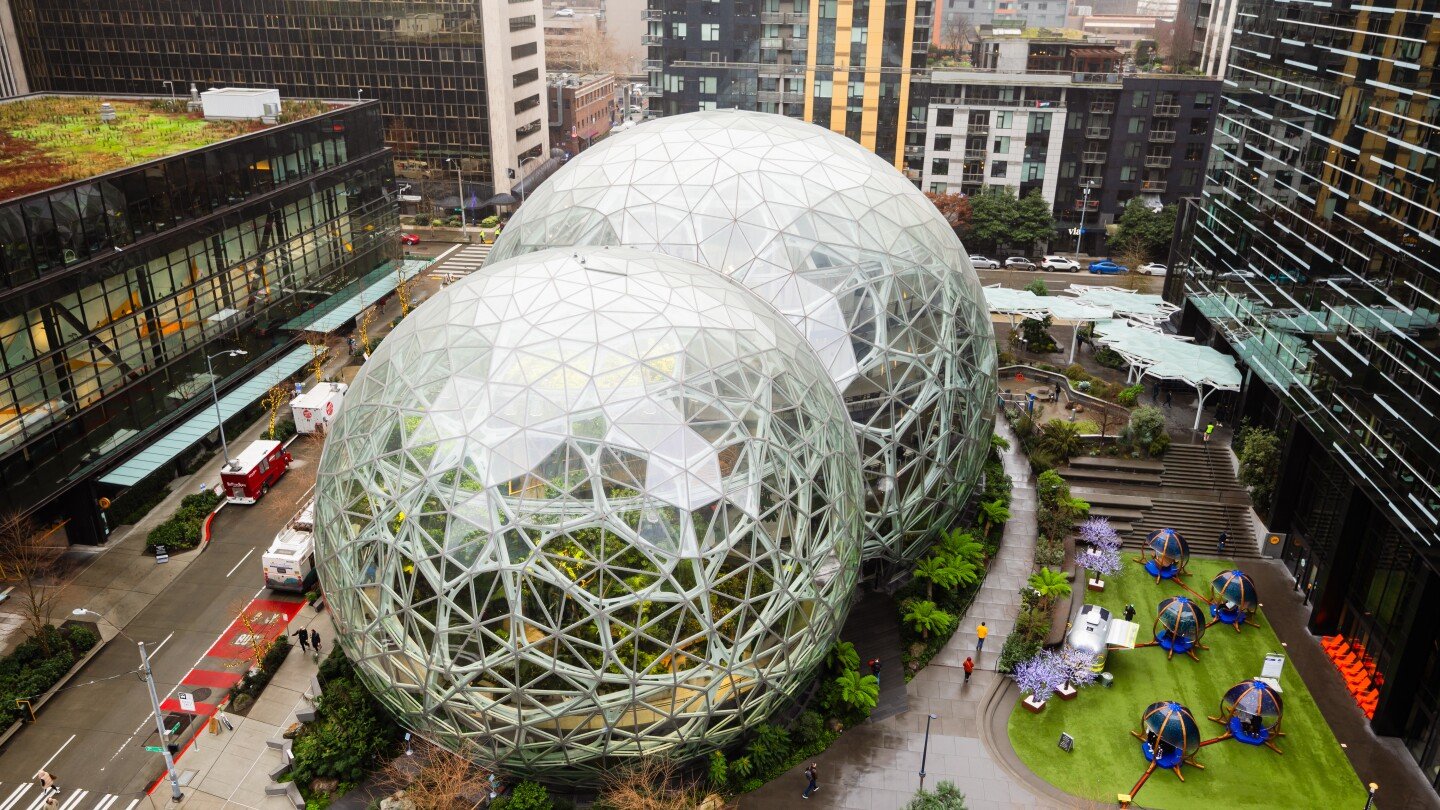
Modern interiors now prioritize daylight, ventilation, greenery, and natural materials as core design elements. Large windows, indoor gardens, water features, and organic forms are no longer limited to luxury projects. Offices, homes, hotels, and educational spaces increasingly apply these principles to create healthier environments. According to global real estate data, buildings with biophilic features achieve rental values 6 to 8 percent higher than conventional interiors.
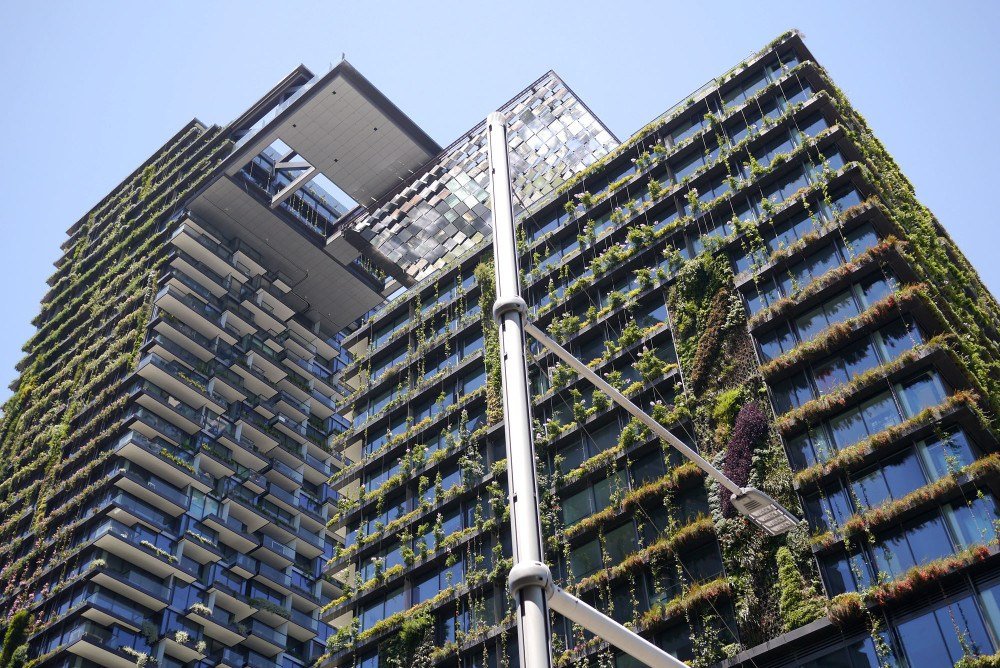
Material choices also reflect this evolution. Designers favor wood, stone, clay, lime plaster, and low VOC finishes due to their sensory and environmental benefits. Research indicates that natural materials can lower heart rate and improve focus within minutes of exposure. This scientific backing has positioned biophilic design as a long term direction rather than a short lived trend.
The influence of global design thinking is visible across emerging markets as well. International concepts are adapted into regional practices such as interior design in Bangladesh and interior design in Chittagong, where climate responsive layouts, shaded interiors, and natural ventilation align seamlessly with biophilic principles. This demonstrates how global interior architecture evolves through shared knowledge while respecting local conditions.
Technology has further accelerated this shift. Smart lighting systems now mimic natural daylight cycles, improving sleep quality by up to 25 percent. Advanced ventilation combined with plant systems can reduce indoor air pollutants by nearly 30 percent. These integrations position biophilic interiors at the intersection of design, health, and performance.[2]
As interior architecture moves forward, the focus is no longer limited to visual appeal or spatial efficiency. The industry now measures success through wellbeing, sustainability, and long term value. Biophilic interior design represents a defining chapter in the global evolution of interiors, proving that spaces designed with nature in mind are not only more beautiful, but measurably better for the people who use them.
Parametric Design in Architecture and Interiors: Algorithmic Precision Shaping Fluid Spaces
Parametric Design in Architecture and Interiors: Algorithmic Precision Shaping Fluid Spaces

Parametric design represents the cutting edge of 2020s architecture, where algorithms and computational modeling shape fluid, adaptive spaces. Unlike traditional design, parametric workflows allow architects and interior designers to optimize form, performance, and aesthetics simultaneously. Today, parametric principles are transforming interiors worldwide, offering flexibility, efficiency, and highly customized spatial experiences.
Origins and Evolution
Parametric design builds on experiments by architects like Frank Gehry in the 1990s, using CATIA to design complex structures such as the Guggenheim Museum Bilbao. With the rise of Grasshopper and Rhino post-2010, parametric tools became mainstream, enabling designers to generate thousands of design variations and optimize for daylight, airflow, structural load, and occupant comfort. Zaha Hadid Architects, for example, now employs parametric workflows in over 60% of projects, integrating both architecture and interiors with precision.

Core Principles of Parametric Design
Algorithmic Generation
Parametric interiors are driven by data. Changing a single variable, such as daylight or occupancy, can instantly update the entire design. This allows spaces to be optimized for comfort, energy efficiency, and visual impact.
Fluid Spatial Flow
Interior walls, ceilings, and partitions can be designed with slight undulations or sweeping curves, creating organic circulation patterns. This fluidity encourages longer dwell times in public interiors and enhances spatial perception in residential environments.
Material and Performance Optimization
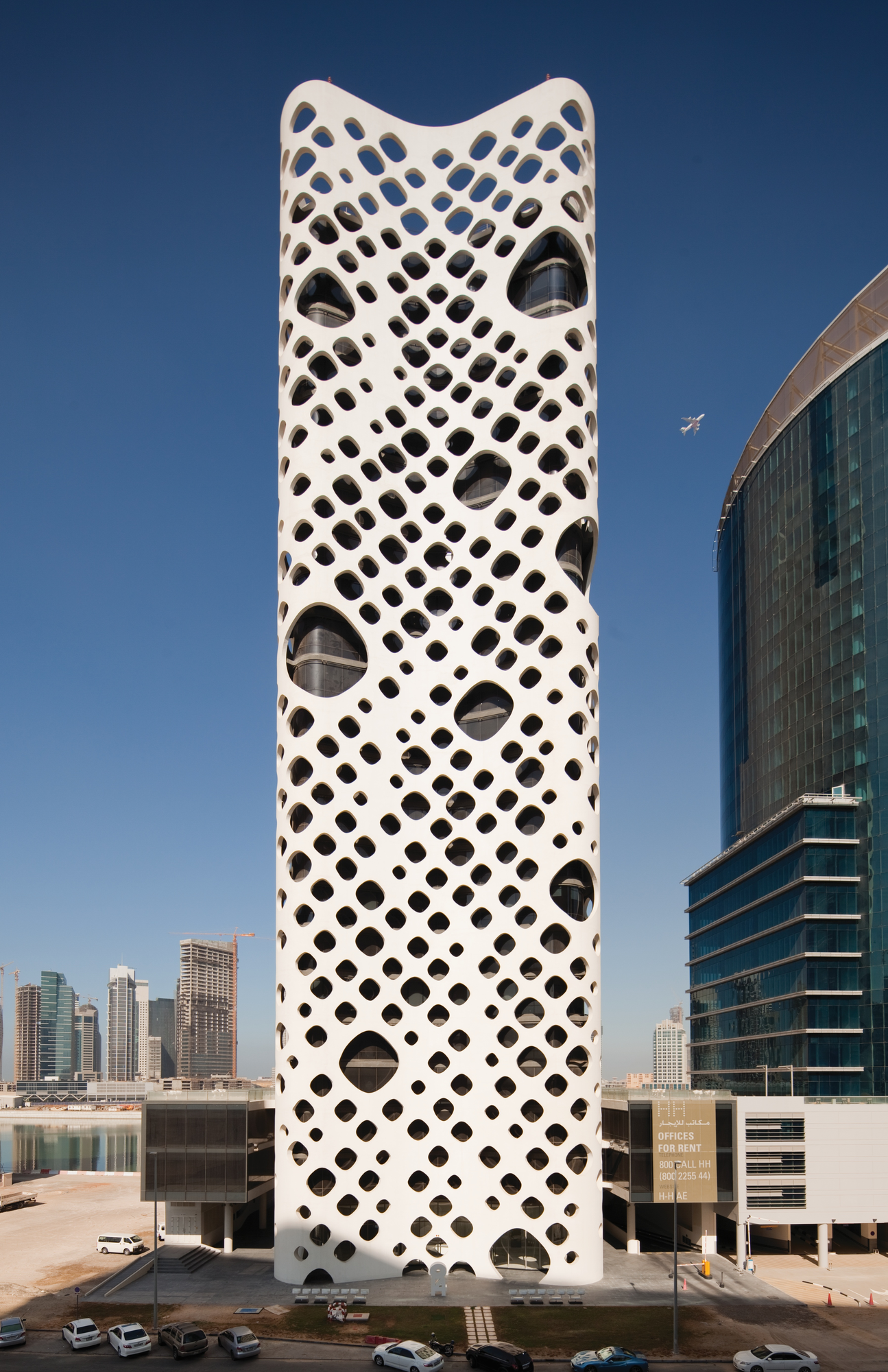
Parametric modeling allows precise material usage, reducing waste by up to 30%. Ultra-high-performance concrete, digital knit facades, and 3D-printed joinery enable unique interiors where every panel, screen, and surface is performance-optimized.
Adaptive Envelopes and Lighting
Facades, ceilings, and floors can adjust dynamically to environmental conditions. Daylight-responsive panels reduce cooling loads by 28%, and algorithmic lighting enhances ambiance and energy efficiency simultaneously.

Applications in Contemporary Interior Design
Parametric design principles are increasingly applied in luxury villas, high-end apartments, and commercial interiors. In Chittagong and across Bangladesh, designers are using parametric shading, fluid layouts, and adaptive partitions to optimize natural light, airflow, and occupant comfort while creating visually stunning interiors.
Residential Interiors: Custom kitchens, modular partitions, and adaptive furniture systems respond to client lifestyle and environmental conditions.
Commercial Spaces: Office layouts and hospitality interiors benefit from optimized circulation, daylighting, and energy-efficient design.
Smart Integration: IoT sensors can now be embedded in parametric models, allowing interiors to adapt automatically to usage patterns.
Sustainability Benefits
Parametric design significantly reduces material waste, optimizes energy performance, and enhances lifecycle sustainability. With careful planning, parametric interiors achieve higher LEED certification rates and reduce embodied carbon by up to 25%, aligning with modern sustainable architecture trends.
Implementation Roadmap for Firms
Final Perspective
Parametric design represents a new paradigm where architecture and interiors merge seamlessly with computational precision. For interior design in Chittagong and interior design in Bangladesh, these principles allow the creation of adaptive, visually fluid, and highly functional spaces that respond to modern lifestyles and climate conditions. By integrating algorithmic workflows, designers can deliver luxury interiors that are sustainable, efficient, and uniquely tailored to each client’s needs.
Metabolism Reborn: Modular Architecture and Interior Design for Modern Urban Living
Metabolism Reborn: Modular Architecture and Interior Design for Modern Urban Living

Metabolism, a visionary Japanese architectural movement from the 1960s, treated cities and buildings as living, evolving organisms. It introduced modular, plug-in units that could be added, removed, or replaced over time, creating endless possibilities for growth and adaptation. While only a few major projects were realized, such as the Nakagin Capsule Tower, the movement profoundly influenced global modular housing and continues to inspire contemporary interiors today.
Origins of Metabolism
Metabolism emerged in post-war Japan as architects like Kiyonori Kikutake, Kisho Kurokawa, and Fumihiko Maki sought solutions for urban density and housing shortages. The 1960 Metabolism manifesto outlined a “permanent framework with replaceable units,” envisioning megastructures capable of evolving like biological systems. This principle directly challenged static modernism and reintroduced adaptability as a core architectural value.
Key Principles of Metabolic Design
Megastructures and Capsule Modules
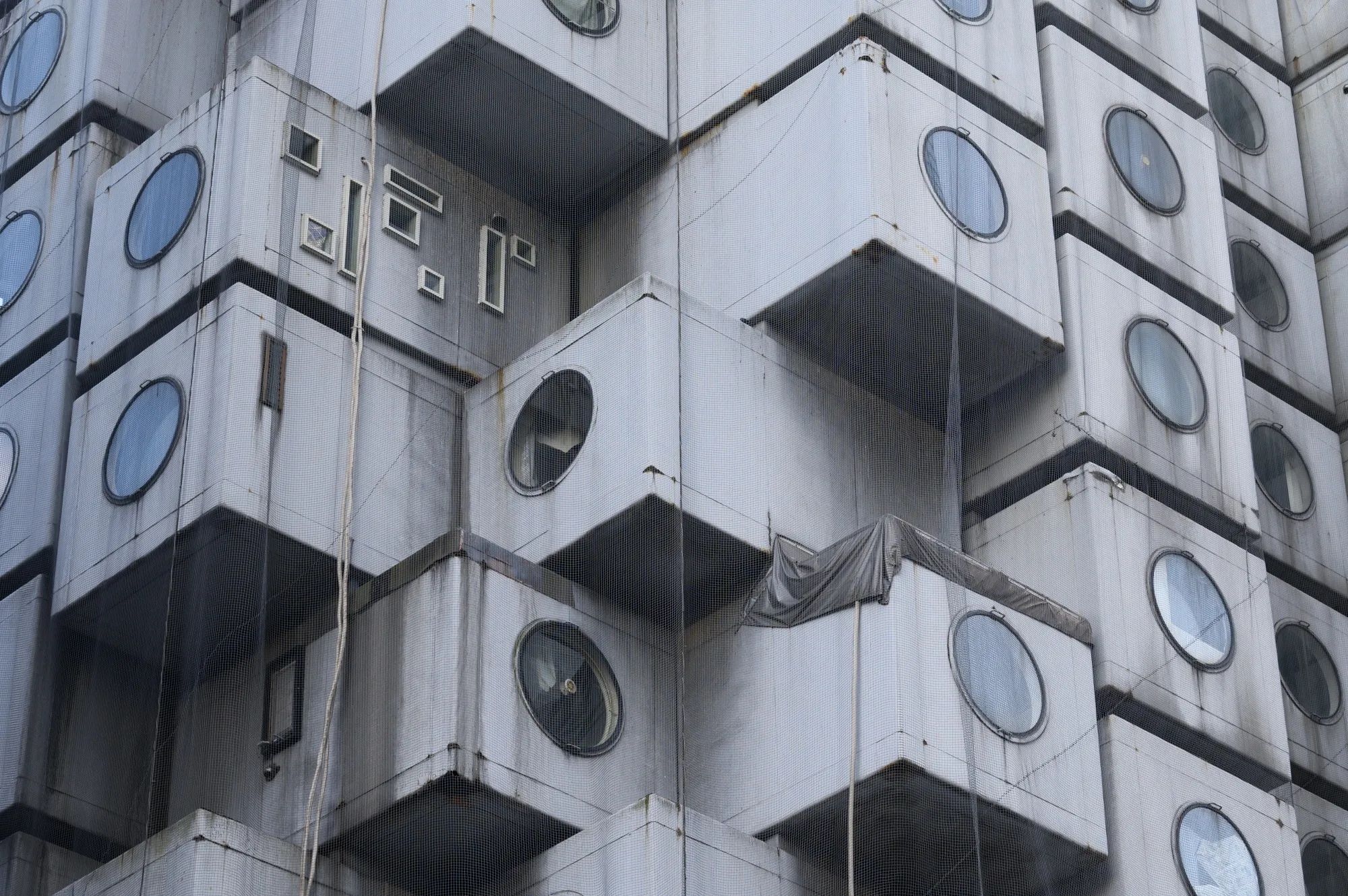
Buildings were designed as permanent skeletons supporting modular pods. The Nakagin Capsule Tower in Tokyo featured 140 steel and concrete capsules, each serving as a self-contained living unit. This modular approach allows interiors to be highly flexible, a principle now applied in high-density residential and commercial design.
Organic Growth and Expansion
Capsules can be added or replaced over time, enabling vertical and horizontal growth without major reconstruction. This strategy offers scalable solutions for urban environments, making it relevant for rapidly growing cities.
Vertical Density Solutions
Metabolism emphasized efficient use of space, with spiral ramps, clustered towers, and stackable modules. Interiors can incorporate small, functional zones, allowing for open yet organized layouts ideal for modern apartments and co-living units.
Material and Prefabrication
Prefabricated steel and concrete units ensure speed, durability, and sustainability. Modern adaptations include modular kitchens, smart home integrations, and lightweight, adaptable partitions—perfect for contemporary interior design in Bangladesh.
Modern Applications in Interior Design
Today, Metabolism informs a new generation of modular homes, high-rise apartments, and commercial interiors. Designers in use metabolic principles to create flexible, functional spaces that maximize usability while maintaining aesthetic appeal.
Residential Spaces: Modular pods with retractable furniture, smart kitchens, and adaptable walls allow interiors to evolve with the occupants’ needs.
Commercial Spaces: Offices and co-working hubs use stackable modules, prefabricated partitions, and movable service cores to accommodate changing teams and workflows.
Sustainability: Prefabricated modules reduce material waste and lifecycle energy use, aligning with modern sustainable design strategies.
Why Metabolism Matters Today
Metabolism demonstrates that flexibility and growth can coexist with beauty and functionality. It allows architects and interior designers to respond to dense urban populations, fast-changing lifestyles, and technological integration—all while creating visually striking spaces.
For interior design in Chittagong and interior design in Bangladesh, metabolic concepts offer a roadmap for modular, adaptive, and future-proof interiors that are both practical and design forward.
Final Perspective
From its 1960s Japanese origins to contemporary modular applications, Metabolism continues to influence architecture and interiors worldwide. Its principles of adaptability, modularity, and organic growth make it highly relevant for modern urban living. By integrating metabolic thinking, designers can craft spaces that evolve with users, delivering functional, sustainable, and visually engaging interiors for today and the future.
High Tech Architecture and Interior Design: Exposed Systems Shaping Futuristic Living Spaces
High Tech Architecture and Interior Design: Exposed Systems Shaping Futuristic Living Spaces

High Tech architecture, often referred to as structural expressionism, emerged in the late twentieth century as a bold redefinition of how buildings and interiors should function and look. Instead of concealing mechanical systems, this movement celebrated them. Pipes, ducts, structural frames, and services became visual features, transforming buildings into readable machines.
What began as a radical idea in the nineteen seventies has now become a defining influence behind today’s smart, flexible, and technology driven interiors.
Origins of the High Tech Movement
The roots of High Tech design trace back to experimental ideas in the nineteen sixties, particularly Cedric Price’s concept of buildings as adaptable frameworks rather than fixed objects. This thinking reached global prominence with the Centre Pompidou in Paris, where structural elements and services were pushed outward, freeing interior space for complete flexibility.
British architects such as Norman Foster, Richard Rogers, and Renzo Piano refined this philosophy, proving that exposed systems could be both functional and elegant. Their work laid the foundation for adaptable buildings designed to evolve with technology and use patterns.
Core Philosophy Behind High Tech Design
High Tech architecture treats buildings as living systems. Structure, circulation, and services are expressed honestly rather than hidden. This approach prioritizes adaptability, transparency, and performance.
Interiors are designed to be reconfigurable. Walls are non load bearing. Services are accessible. Spaces evolve without structural compromise. This philosophy directly informs modern interiors where technology, sustainability, and long term usability are central expectations.
Defining Characteristics of High Tech Interiors
Exposed Mechanical Systems
HVAC ducts, electrical conduits, plumbing, and data lines remain visible and intentionally designed. Color coding and clean alignment turn infrastructure into visual rhythm rather than clutter.
Structural Expression
Steel frames, diagrids, and trusses are left exposed, creating a strong architectural identity inside the space. Structure becomes both aesthetic and educational.
Transparency and Light
Glass dominates the material palette. Large glazed surfaces maximize daylight and create visual continuity between interior zones, improving both comfort and energy performance.
Modularity and Flexibility
Furniture systems, partitions, and service cores are designed to be movable. Interiors can be reorganized quickly to support changing needs, from residential layouts to commercial workflows.
Industrial Material Palette
Steel, aluminum, glass, exposed concrete, and composite panels define the aesthetic. These materials support durability, precision, and clean detailing.
Iconic References That Shaped the Language
Projects like the Centre Pompidou, the Lloyd’s Building in London, and the HSBC Headquarters in Hong Kong demonstrated how complex services could define architectural character. More recently, Apple Park and similar campuses show how high tech principles now integrate sustainability, comfort, and digital infrastructure.
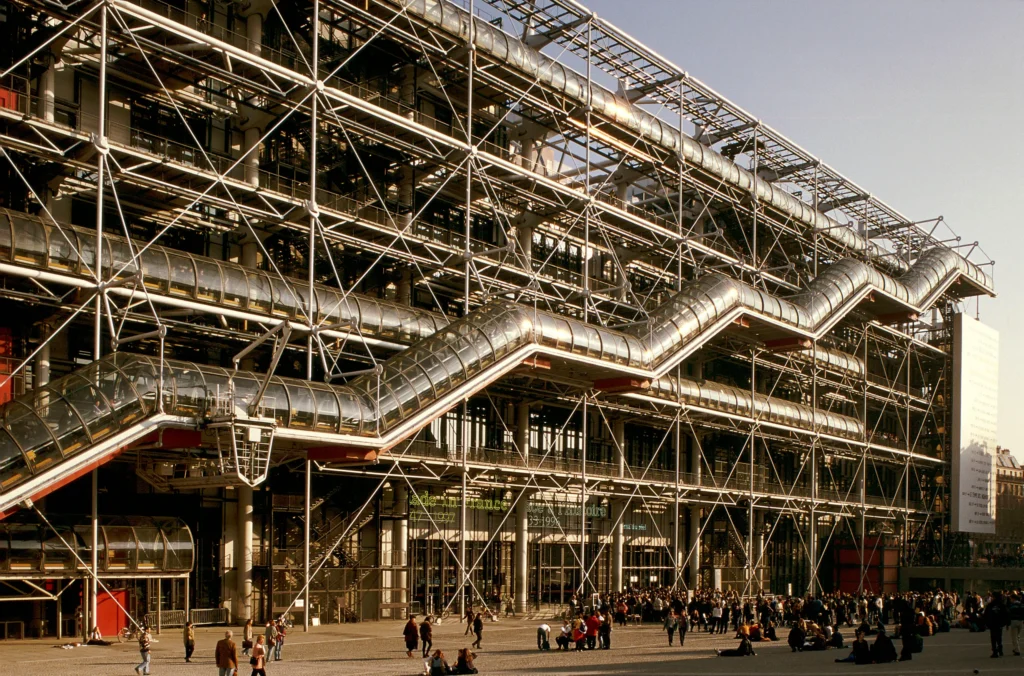


These precedents continue to influence how contemporary interiors are planned and executed across residential, commercial, and institutional sectors.
High Tech Design in Contemporary Interiors
Today’s interpretation of High Tech design is more refined and user focused. Technology is still visible, but it is carefully curated. Lighting tracks, exposed ducts, and smart systems are integrated with acoustic planning, thermal comfort, and spatial clarity.
In residential interiors, exposed ceilings paired with smart lighting and climate control systems create a futuristic yet livable environment. In offices and commercial spaces, visible infrastructure communicates innovation, transparency, and operational efficiency.
Design practices involved in interior design in Chittagong and interior design in Bangladesh increasingly apply High Tech elements in modern apartments, tech offices, and mixed use developments where adaptability and smart integration are key client priorities.
Sustainability and Performance Benefits
High Tech architecture aligns naturally with sustainable design. Exposed systems simplify maintenance and upgrades. Prefabricated components reduce construction waste. Flexible layouts extend building life cycles by allowing spaces to evolve rather than be demolished.
Many high tech inspired interiors achieve significant energy savings through daylight optimization, efficient HVAC distribution, and smart monitoring systems.
Strategic Value for Clients
High Tech interiors signal progress, precision, and confidence. They are particularly effective for clients who value innovation, future readiness, and architectural clarity. In competitive urban markets, these interiors differentiate properties by combining visual impact with operational intelligence.
The most successful projects apply High Tech principles selectively, using exposed systems as focal elements while maintaining comfort and coherence throughout the space.
Final Perspective
High Tech architecture transformed buildings by turning infrastructure into identity. Its influence on interior design continues to grow as technology becomes inseparable from daily living. When executed with discipline, High Tech interiors deliver clarity, adaptability, and a distinctly modern character that responds directly to how people live and work today.
Deconstructivism in Architecture and Interior Design: Fragmented Forms Shaping Experiential Spaces
Deconstructivism in Architecture and Interior Design: Fragmented Forms Shaping Experiential Spaces
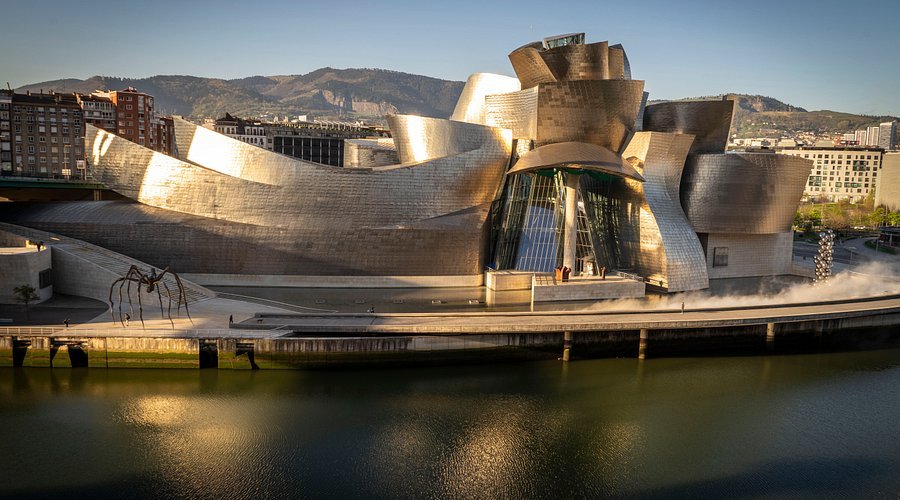
Deconstructivism emerged in the mid nineteen eighties as one of the most radical architectural movements of the late twentieth century. It deliberately disrupted balance, symmetry, and visual comfort, replacing predictable order with fragmentation, tension, and controlled chaos. Rather than creating harmony, deconstructivist design challenges perception, encouraging users to experience space emotionally and psychologically.
In today’s experience driven design culture, these principles are increasingly influential in high impact interiors that seek distinction rather than neutrality.
Philosophical Origins and Architectural Shift
The movement drew intellectual influence from philosopher Jacques Derrida, whose theory of deconstruction questioned fixed meanings and rigid binaries. Architects applied this thinking to the built environment by dismantling conventional ideas of form, structure, and spatial hierarchy.
Unlike postmodernism, which reintroduced historical references with irony, deconstructivism avoided nostalgia altogether. It focused on instability, disjunction, and abstraction. Buildings and interiors appeared intentionally unfinished or fractured, forcing users to question how spaces are traditionally read and navigated.
Defining Characteristics of Deconstructivist Design
Fragmented Geometry
Spaces appear broken apart and reassembled. Walls, floors, and ceilings rarely align, creating a sense of motion and tension. This fragmentation allows a single interior to be divided into multiple experiential zones without conventional partitions.
Non Orthogonal Forms
Straight lines and right angles are deliberately avoided. Curves intersect with sharp angles, and planes tilt unexpectedly. This results in dynamic interiors that feel sculptural rather than static.
Asymmetry and Visual Instability
There is no visual center or mirrored balance. Each viewpoint offers a different reading of the space, encouraging exploration and engagement.
Material Contrast
Smooth glass meets raw concrete. Industrial metals intersect with polished surfaces. These material juxtapositions amplify the sense of contradiction that defines deconstructivist interiors.
Disrupted Spatial Flow
Circulation paths resist predictability. Staircases become architectural statements. Corridors bend, narrow, or expand unexpectedly, turning movement into an experience rather than a transition.
Iconic Architectural References
Projects such as the Guggenheim Museum Bilbao, the Jewish Museum Berlin, and Zaha Hadid’s early concrete works defined the visual language of deconstructivism. These buildings demonstrated how fragmentation and distortion could be engineered with precision rather than chaos, proving the movement’s technical credibility.
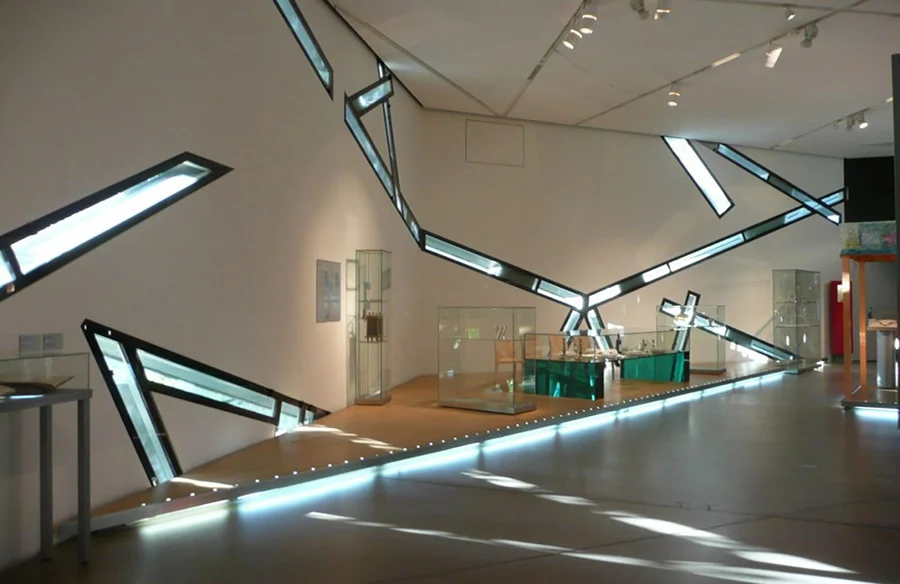
Their interiors remain influential benchmarks for experiential design, particularly in cultural, hospitality, and statement residential projects.
Deconstructivism in Contemporary Interiors
Today, deconstructivism has evolved through digital design tools and parametric modeling. Advanced software allows designers to control complexity with precision, making fragmented interiors more buildable and functional than their early counterparts.
In luxury residences, fragmented wall planes subtly define living zones while maintaining openness. In hospitality interiors, fractured ceilings and angular lighting installations create immersive environments designed for memorability and visual impact. Commercial spaces use geometric disruption to reflect innovation and forward thinking brand identities.
Design studios working in interior design in Chittagong and interior design in Bangladesh increasingly draw from these principles when clients seek interiors that move beyond minimalism and make a bold architectural statement.
Strategic Value for Modern Clients
Deconstructivist interiors are not about excess for its own sake. When applied selectively, they deliver strong spatial narratives, elevate brand perception, and differentiate projects in competitive markets. These interiors photograph well, perform strongly on digital platforms, and resonate with clients who value originality and architectural depth.
The key lies in balance. A single fragmented element, such as a sculptural staircase or angular ceiling plane, can anchor the design while surrounding spaces remain refined and functional.
Technical and Practical Considerations
Successful deconstructivist interiors rely heavily on early collaboration between designers, engineers, and fabricators. Digital modeling ensures accuracy, while lighting design plays a critical role in highlighting fractures and intersections. Materials must be carefully selected to support both visual drama and long term durability.
Final Perspective
Deconstructivism challenged architecture by rejecting stability and predictability. Its legacy is not disorder, but intention driven disruption. In contemporary interior design, these principles offer a powerful toolkit for creating spaces that engage, provoke, and leave lasting impressions. When executed with discipline, deconstructivist design transforms interiors into architectural experiences rather than mere enclosures.
Postmodern Interior Design Explained: How Playful Architecture Shapes Contemporary Spaces
Postmodern Interior Design Explained: How Playful Architecture Shapes Contemporary Spaces
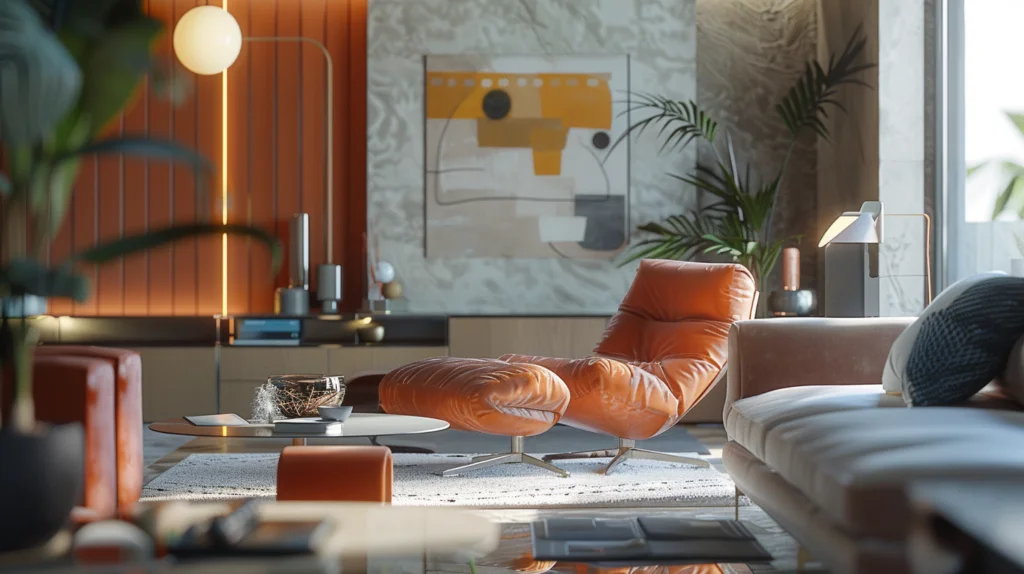
Postmodernism emerged in the late twentieth century as architecture’s calculated rebellion against the cold logic of modernism. Where modernist interiors prioritized efficiency and restraint, postmodern spaces reintroduced emotion, symbolism, and visual storytelling. This shift transformed interiors from neutral backdrops into expressive environments designed to provoke thought, curiosity, and connection.
Today, as clients increasingly seek interiors that feel personal rather than generic, postmodern design principles are experiencing a renewed relevance.
Origins of Postmodern Architecture and Interiors
Postmodernism took shape in the 1970s when architects and theorists openly challenged the idea that form must strictly follow function. Robert Venturi’s critique of minimalism reframed architecture as a communicative art rather than a purely rational system. Ornament, historical reference, and contradiction returned, not as nostalgia, but as intentional design language.
Unlike earlier revival styles, postmodernism did not aim for historical accuracy. It borrowed, distorted, and reassembled classical motifs, allowing interiors to reference multiple eras simultaneously.
Defining Characteristics of Postmodern Interiors
Eclectic Composition
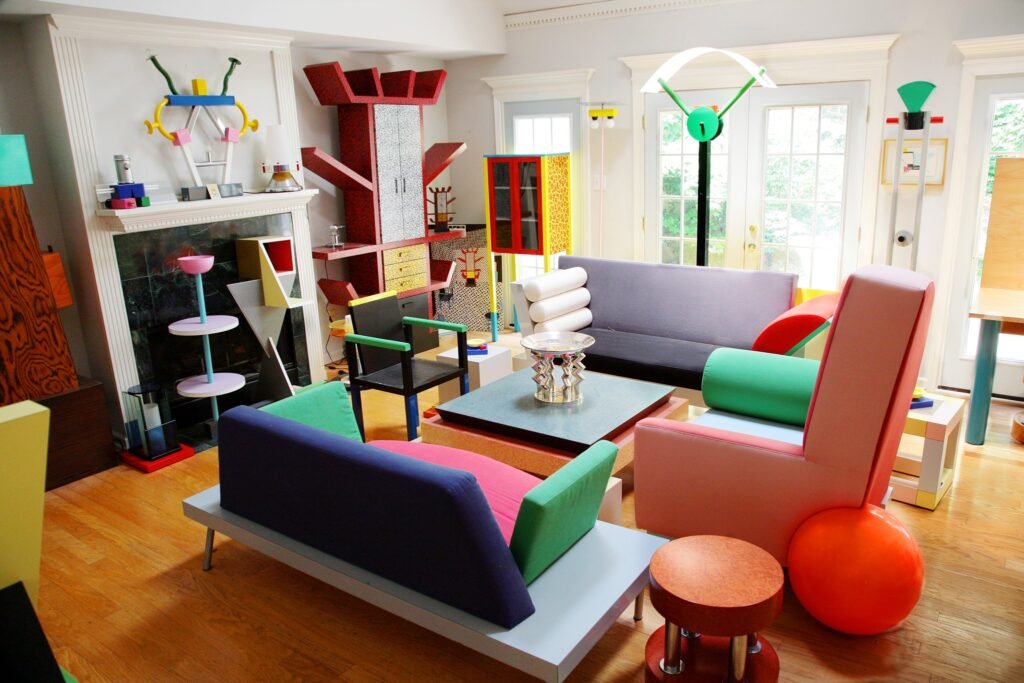
Postmodern interiors thrive on contrast. Classical elements coexist with contemporary forms, pop culture references, and abstract geometry. A single space may combine sculptural furniture, graphic patterns, and architectural fragments, creating layered visual narratives.
Bold and Expressive Color
Neutral palettes give way to vibrant contrasts. Saturated hues, unexpected combinations, and color blocking energize interiors and establish focal points. This approach is often used selectively in modern projects to create memorable spaces without overwhelming function.
Playful Proportion and Form
Furniture and architectural elements frequently challenge conventional scale. Oversized forms, fragmented geometries, and asymmetrical layouts introduce movement and visual tension, encouraging interaction rather than passive observation.
Material Experimentation
Postmodern interiors favor material freedom. Glossy laminates, reflective surfaces, plush textiles, faux finishes, and patterned materials are layered to create tactile richness. This versatility allows designers to balance expressive aesthetics with practical constraints.
Narrative Driven Detailing
Lighting, ornament, and surface treatments often carry symbolic or ironic meaning. Interiors become storytelling tools, communicating identity and intent rather than adhering to uniform design rules.
Iconic Influences That Shaped the Movement
The Memphis Group, led by Ettore Sottsass, redefined furniture as expressive art. Architects such as Michael Graves and Philip Johnson reintroduced color and historical symbolism into large scale architecture, influencing how interiors could balance sophistication with playfulness. These references continue to inform contemporary design strategies, particularly in spaces that prioritize brand personality or experiential value.


Postmodern Principles in Today’s Interiors
Modern interpretations of postmodernism are more refined and intentional. The visual language remains expressive, but it is supported by advanced planning, technology integration, and user comfort. Bold forms are balanced with spatial clarity. Color is curated rather than chaotic.
In urban residential projects and commercial interiors, including evolving design markets such as Chittagong, designers increasingly apply postmodern concepts to break away from repetitive layouts while still respecting lifestyle and climate considerations.
Strategic Value for Contemporary Design
Postmodern interiors differentiate. They invite engagement. They leave lasting impressions. In an era dominated by minimal trends and algorithm driven aesthetics, expressive interiors stand out, both physically and digitally.
For interior design practices, postmodernism offers a framework for client storytelling, allowing spaces to reflect cultural references, personal narratives, and modern functionality without visual conformity.
Final Perspective
Postmodernism reshaped interior design by challenging rigidity and celebrating contradiction. Its legacy is not excess, but intention. When applied with discipline, postmodern design creates spaces that feel intelligent, layered, and emotionally resonant. As contemporary interiors continue to evolve, the movement remains a powerful reminder that design is not just about how a space works, but how it speaks.
Contemporary and Sustainable Design: From Postmodernism to Biophilic and Tech-Integrated Spaces
Contemporary and Sustainable Design: From Postmodernism to Biophilic and Tech-Integrated Spaces

Contemporary architecture and interior design have undergone a remarkable evolution from the late 20th century to today. What began as a reaction to Modernism’s rigidity has transformed into a design ethos defined by sustainability, biophilic principles, and smart technology integration. This journey spans from the playful eclecticism of Postmodernism to an era where green buildings and responsive interiors are becoming the norm. In this article, we explore how philosophical shifts, material innovations, environmental responsibility, and digital tools have reshaped the way we design our homes, workplaces, and cities. The goal is to understand how these movements – from symbolic Postmodern architecture to human-centric, sustainable, and tech-enabled spaces – shape modern design practice. This comprehensive overview is written from the perspective of a seasoned architect, aiming to educate homeowners, design enthusiasts, and professionals alike. Whether you are planning your dream home or working with an interior design firm in chittagong, understanding this evolution is crucial to creating spaces that are both cutting-edge and responsible.
Overview of Contemporary Architectural and Interior Design
Modern design today is incredibly diverse, but certain core themes define the contemporary approach. The late 20th century saw architects rebelling against sterile glass-box modernism by embracing color, irony, and complexity. Postmodernism, with its bold forms and historical references, paved the way for a more pluralistic design language. Fast forward to the 21st century, and the spirit of reinvention continues with styles like parametricism, eco-futurism, and minimalism all coexisting. Despite their differences, contemporary architectural styles share a common context: they respond to cultural shifts, technological advances, and urgent environmental challenges.
Two forces have become especially defining in recent decades: sustainability and technology. In the design of both buildings and interiors, environmental responsibility is now often a baseline requirement rather than an afterthought. Likewise, digital innovation has transformed both the process of design and the functionality of spaces – from how architects use Building Information Modeling (BIM) to how homeowners use smart home systems. As we shall see, sustainability and technology are not isolated trends but intersecting forces that together drive a more human-centered, adaptive, and resilient approach to design. A contemporary building is expected to save energy and connect with nature, and to offer the convenience and connectivity of the digital age, all while providing aesthetic and cultural meaning. This overview sets the stage for delving into the key movements and ideas, starting with the transition out of the Modernist era.
From Postmodernism to Contemporary Thought
Postmodernism emerged in the late 1960s as a critical reaction against the strict minimalism and functionalism of high modernism. Modernist architecture (epitomized by the mantra “less is more”) had produced austere, boxy forms and uniform glass-and-steel façades. In contrast, Postmodern architects championed ornamentation, symbolism, and complexity, reintroducing decorative elements and historical allusions into building design. Architects like Robert Venturi, Philip Johnson, and Michael Graves sought to make architecture more communicative and contextual. Venturi’s pivotal 1966 book Complexity and Contradiction in Architecture signaled that “less is a bore,” inviting architecture to once again embrace eclecticism and plurality. Postmodern buildings might feature playful forms, vibrant colors, or references to classical motifs – all intended to convey meaning or respond to their surroundings beyond pure function.
In interior design, the Postmodern ethos brought a similar break from restraint. Spaces in the 1970s and 80s began to feature bold color palettes, geometric patterns, and a mix of styles. The Memphis Design movement exemplified Postmodern interiors with its brightly colored furniture, whimsical shapes, and collage of materials. This was a stark departure from the neutral tones and strict minimalism of prior decades. Postmodern interiors often told a story or made a statement – a living room might blend a modern sofa with a rococo-style mirror and pop art on the walls, all in bold hues. The aim was to create interiors with personality, historical reference, and even irony, reflecting the era’s embrace of diversity and decorative detail.
By the turn of the 21st century, the influence of Postmodernism had opened architecture and interiors to greater stylistic freedom and context-driven design. Contemporary practice does not adhere to a single dominant style; instead, architects and designers borrow from multiple influences – a pluralism that is a legacy of Postmodernism. However, new pressing issues and philosophies arose that went beyond style for style’s sake. Globalization, climate change, and the digital revolution started to demand solutions that Postmodernism alone didn’t address. Thus, while Postmodernism broke the monotony of Modernism and enriched design with symbolism and context, the stage was set for further evolution.
Changing Social, Environmental, and Technological Contexts
The late 20th and early 21st centuries have seen rapid changes that profoundly affect architecture and interior design. Social and demographic shifts – such as globalization, urbanization, and new lifestyle patterns – have reshaped what we need from our spaces. At the same time, environmental imperatives like climate change have elevated sustainability from a niche concern to a central design priority. And in parallel, technological advancements have revolutionized both how we design and how we live within buildings.
Globalization has made design ideas circulate widely, resulting in a fusion of influences in architecture and interiors. Meanwhile, cities have grown dramatically, and in Bangladesh, urban density has intensified the demand for compact, efficient living. This pressure reshapes spatial planning: open layouts to increase perceived space, built-in storage, and multifunctional rooms are now common responses.
Climate awareness is one of the strongest forces shaping contemporary architecture. Buildings consume large amounts of energy, and architects today must address carbon footprint, operational energy use, and resilience. In warm and humid regions like Bangladesh, climate-responsive design is not optional; it is fundamental. Passive cooling, shading, cross-ventilation, roof insulation, and water management strategies help reduce dependence on mechanical systems while improving comfort.
Technology has also altered daily spatial needs. Remote work has made the home office a standard requirement, even in small apartments. Digital connectivity influences how interiors are furnished, where outlets are placed, how lighting supports screen-based work, and how acoustics are managed. At the professional level, digital design tools allow more accurate simulations, coordinated construction documentation, and performance-based decision-making.
Sustainable Architecture and Interior Design
Sustainable design aims to reduce environmental harm while creating healthier interiors and more resilient buildings. It is not a single aesthetic but a design discipline grounded in performance, responsibility, and context.
Passive design remains a cornerstone. In simple terms, it means designing with sunlight, wind, shade, thermal mass, and insulation so that a building stays comfortable with minimal mechanical heating or cooling. Orientation, window placement, shading devices, and cross-ventilation all shape energy performance. For interiors, sustainability extends to lighting efficiency, appliance selection, and planning spaces that reduce unnecessary energy use.
Material decisions are equally central. Contemporary sustainable practice considers the full life cycle of materials: how they are sourced, produced, transported, used, and disposed of. Low-impact materials include renewable options like bamboo and responsibly harvested timber, recycled materials, and finishes with minimal toxic emissions. Durable materials that age well are often more sustainable than trend-driven finishes that require frequent replacement. Designers increasingly consider embodied carbon, choosing materials and construction approaches that reduce emissions beyond day-to-day energy use.
Sustainable design is most effective when it responds to local conditions. In Bangladesh, traditional strategies such as courtyards, deep shading, high ceilings, and ventilated spaces are climate-smart solutions. Contemporary architects often reinterpret these ideas in modern forms, combining cultural memory with environmental performance.
Biophilic Design: Reconnecting Humans with Nature
Biophilic design is based on the idea that humans have an innate need for connection to nature. When buildings disconnect people from daylight, air, greenery, and natural rhythms, it affects well-being. Biophilic design reconnects occupants with nature through light, ventilation, materials, vegetation, and spatial experiences that echo natural environments.
Practical strategies include maximizing natural light, designing for natural ventilation, adding indoor planting, creating green walls, incorporating water features, and using tactile natural materials like wood and stone. Views of nature are powerful: even a small garden view or balcony greenery can improve mood and reduce stress. In urban contexts where nature is limited, biophilic interiors provide everyday contact with living systems.
The benefits of biophilic design include reduced stress, improved focus, better comfort perception, and enhanced psychological well-being. This is why biophilic strategies are increasingly applied in schools, hospitals, offices, and homes. A well-designed biophilic space does not rely on decoration; it integrates nature as a fundamental design component.
In Bangladesh, biophilic thinking aligns naturally with the courtyard tradition and the social value placed on outdoor-adjacent living. Even in compact apartments, balconies, planters, rooftop gardens, and natural airflow patterns can create meaningful connections with nature. For an interior design firm in chittagong, biophilic design is increasingly relevant because dense urban living often reduces access to green space, making interior nature integration more valuable.
Technology-Integrated Spaces and Smart Interiors
Technology now shapes both the design process and the everyday experience of buildings. Smart interiors integrate digital systems to improve comfort, efficiency, safety, and adaptability, but the goal should always remain human-centered design rather than gadget-driven planning.
Digital tools have transformed professional practice. BIM, parametric modeling, and simulation software enable designers to test daylight, energy use, ventilation strategies, and material quantities before construction. This reduces waste, improves coordination, and supports sustainable decision-making.
In the built environment, smart systems include automation for lighting, climate control, shading, security, and energy monitoring. Smart lighting can adjust based on time of day, occupancy, or user preference. Automated climate systems can maintain comfort while reducing energy consumption. Sensors can improve building performance by providing real-time data and enabling responsive control.
The key design challenge is integration. Technology must support everyday life without making interiors feel overly mechanized. Good smart design is discreet, intuitive, and adaptable. It should also consider privacy, maintenance, and long-term usability. In contemporary practice, the most successful technology-integrated spaces are those where systems disappear into the background while quietly improving spatial quality.
Spatial Planning and Interior Expression in Contemporary Design
Contemporary spatial planning emphasizes openness, flexibility, and refined comfort. Open plans remain popular because they increase daylight distribution and support social interaction. However, thoughtful zoning is required to maintain privacy and functionality. Designers often use furniture layouts, ceiling changes, sliding partitions, and material transitions to define spaces without closing them off.
Flexibility is now a priority in both homes and workplaces. Multifunctional rooms and adaptable furniture respond to shifting lifestyles, including remote work and evolving family needs. The planning philosophy increasingly values spaces that can evolve over time rather than serving only one fixed function.
Aesthetic expression has also shifted. Many contemporary interiors favor minimalism, material honesty, and clean detailing. Rather than decorative excess, designers focus on proportion, texture, and construction precision. The material palette often leans toward natural finishes, neutral tones, and restrained contrasts. This approach allows spaces to feel calm and timeless while highlighting craftsmanship.
Comfort parameters like acoustics and lighting are now treated as design fundamentals. Open interiors and hard surfaces require acoustic planning, often through soft materials and discreet acoustic systems. Lighting is planned in layers: ambient light for overall comfort, task lighting for work surfaces, and accent lighting to create depth and atmosphere. Ergonomics and human-centered design guide the scale of furniture, circulation space, and placement of everyday elements.
Material Innovation and Environmental Responsibility
Contemporary design increasingly depends on material innovation. The push for environmental architecture has accelerated research into low-impact, recycled, and renewable materials, and has expanded the possibilities of fabrication and construction.
Recycled and renewable materials are now widely used in interior and architectural finishes, including recycled wood, reclaimed brick, recycled metal, and bio-based composites. Renewable materials such as bamboo, cork, and responsibly sourced timber are valued for low embodied energy and long-term durability.
Construction technology is evolving as well. Prefabrication and modular construction can reduce waste and improve quality by shifting production into controlled environments. Digital fabrication allows complex forms and precise joinery, often using CNC processes to minimize material loss. Emerging areas like 3D printing and experimental bio-materials suggest a future where construction becomes more circular and material waste decreases significantly.
However, innovation is most meaningful when paired with responsibility. Materials should be selected based on durability, indoor health impact, repairability, and long-term adaptability. A truly contemporary interior is not just visually modern; it is designed to age gracefully, minimize resource depletion, and support healthy living.
Contemporary Design in the Bangladeshi Context
In Bangladesh, contemporary architecture and interior design are shaped by climate, density, cultural habits, and economic realities. Sustainability is often an environmental necessity rather than a design preference. The country’s hot and humid climate demands ventilation, shading, rain protection, and heat reduction strategies. Many contemporary buildings reinterpret traditional elements such as courtyards, shaded transitional spaces, and locally appropriate materials.
Urban living in Dhaka and Chittagong requires space efficiency. Interior planning focuses on multifunctional layouts, integrated storage, and flexible spaces that can accommodate work-from-home needs. As apartments become smaller, thoughtful spatial design becomes a measure of livability rather than luxury.
Sustainable and biophilic principles are becoming increasingly relevant across residential and commercial design. Greenery integration, improved daylight access, and natural ventilation are not only environmental strategies; they directly improve comfort and well-being in dense cities. In this context, the growing relevance of sustainable and biophilic principles for an interior design firm in chittagong is practical: it addresses urban stress, limited natural access, and the need for healthier indoor environments.
Technology integration in Bangladesh is growing steadily, especially in higher-end residential and commercial projects. Smart lighting and security systems are increasingly common, and energy monitoring is gaining attention as electricity cost and reliability become critical concerns. The key challenge is designing smart interiors that remain practical, maintainable, and culturally appropriate.
Influence on Future Architectural and Interior Design Practice
Looking forward, contemporary design will likely be shaped by adaptive reuse, resilience, and deeper integration of performance-based design thinking. Adaptive reuse is increasingly important because it preserves resources and heritage while reducing construction waste. Instead of demolishing buildings, architects and interior designers are learning to transform existing structures into new uses, combining contemporary interventions with preserved character.
Resilient design will become more central as climate risks intensify. This includes strategies for flood resistance, heat mitigation, durable material selection, and flexible building systems. Resilience also has a social component: designs must support community stability, safety, and long-term usability.
Another major influence will be the continued merging of digital tools with design intelligence. Simulation and data analysis will increasingly guide early-stage decisions, enabling designers to predict building performance and refine interiors for comfort and efficiency. Architects and designers will function more as coordinators of systems, balancing aesthetics, environmental goals, and user experience.
The future also points to a deeper blend of heritage and modern design. Contemporary practice will increasingly value local materials, craft, and cultural patterns, not as superficial decoration but as meaningful architectural logic. In Bangladesh, this can result in designs that feel modern while remaining rooted in climate and culture.
Conclusion
The evolution from Postmodernism to contemporary sustainable, biophilic, and technology-integrated design reflects more than stylistic change. It represents a shift in design philosophy. Postmodernism challenged Modernism’s rigidity and reintroduced symbolism, pluralism, and contextual thinking. That freedom enabled contemporary practice to embrace diversity, but new global realities demanded more than visual expression.
Sustainability brought performance and responsibility to the forefront. Biophilic design expanded the goals of interiors beyond aesthetics, emphasizing human well-being through reconnection with nature. Technology-integrated spaces introduced a new layer of responsiveness and convenience, requiring designers to balance automation with human-centered design values.
Contemporary architecture and interior design today continue to redefine how we live, work, and relate to our surroundings. The most relevant work is no longer only what looks modern, but what performs intelligently, supports health, respects culture, and responds to environmental realities. In that sense, contemporary design is not a fixed destination but an ongoing discipline—shaped by time, place, and the continuous relationship between people and the built environment.