
Origins of Postmodern Architecture and Interiors
Postmodernism took shape in the 1970s when architects and theorists openly challenged the idea that form must strictly follow function. Robert Venturi’s critique of minimalism reframed architecture as a communicative art rather than a purely rational system. Ornament, historical reference, and contradiction returned, not as nostalgia, but as intentional design language.
Unlike earlier revival styles, postmodernism did not aim for historical accuracy. It borrowed, distorted, and reassembled classical motifs, allowing interiors to reference multiple eras simultaneously.
Defining Characteristics of Postmodern Interiors
Eclectic Composition
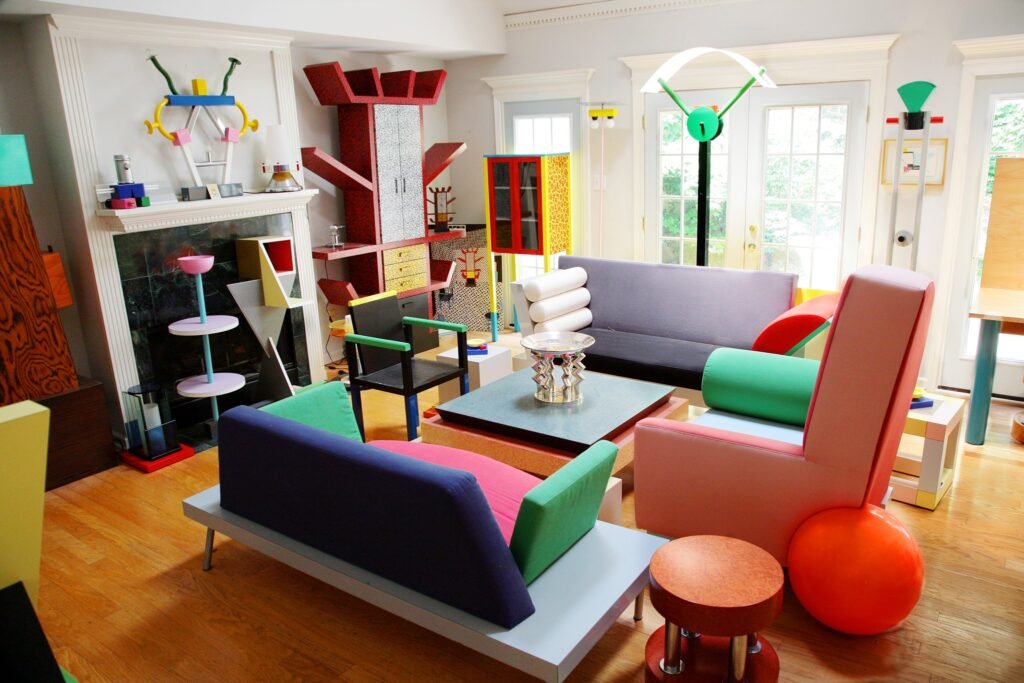
Postmodern interiors thrive on contrast. Classical elements coexist with contemporary forms, pop culture references, and abstract geometry. A single space may combine sculptural furniture, graphic patterns, and architectural fragments, creating layered visual narratives.
Bold and Expressive Color
Neutral palettes give way to vibrant contrasts. Saturated hues, unexpected combinations, and color blocking energize interiors and establish focal points. This approach is often used selectively in modern projects to create memorable spaces without overwhelming function.
Playful Proportion and Form
Furniture and architectural elements frequently challenge conventional scale. Oversized forms, fragmented geometries, and asymmetrical layouts introduce movement and visual tension, encouraging interaction rather than passive observation.
Material Experimentation
Postmodern interiors favor material freedom. Glossy laminates, reflective surfaces, plush textiles, faux finishes, and patterned materials are layered to create tactile richness. This versatility allows designers to balance expressive aesthetics with practical constraints.
Narrative Driven Detailing
Lighting, ornament, and surface treatments often carry symbolic or ironic meaning. Interiors become storytelling tools, communicating identity and intent rather than adhering to uniform design rules.
Iconic Influences That Shaped the Movement
The Memphis Group, led by Ettore Sottsass, redefined furniture as expressive art. Architects such as Michael Graves and Philip Johnson reintroduced color and historical symbolism into large scale architecture, influencing how interiors could balance sophistication with playfulness. These references continue to inform contemporary design strategies, particularly in spaces that prioritize brand personality or experiential value.


Postmodern Principles in Today’s Interiors
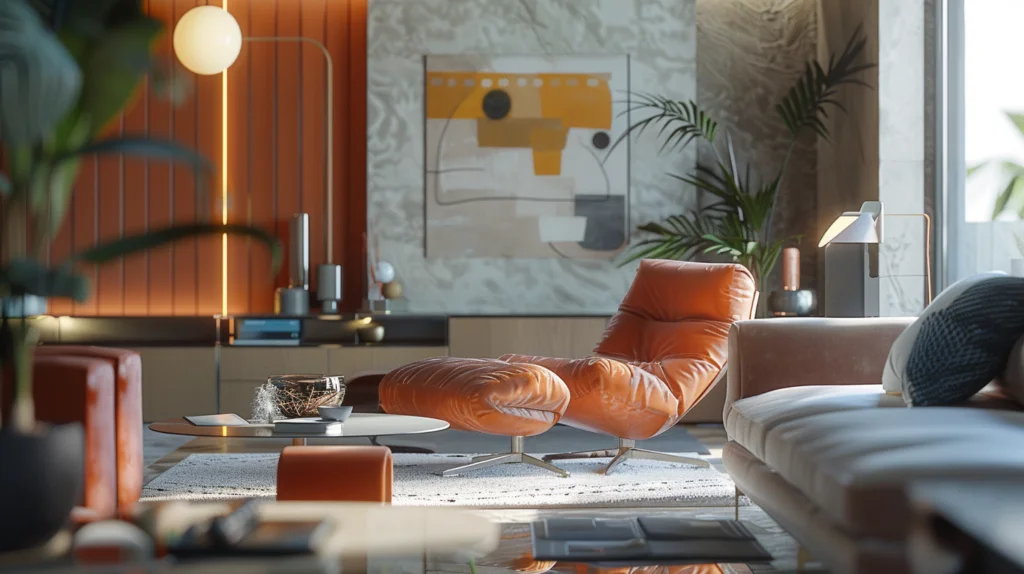
Modern interpretations of postmodernism are more refined and intentional. The visual language remains expressive, but it is supported by advanced planning, technology integration, and user comfort. Bold forms are balanced with spatial clarity. Color is curated rather than chaotic.
In urban residential projects and commercial interiors, including evolving design markets such as Chittagong, designers increasingly apply postmodern concepts to break away from repetitive layouts while still respecting lifestyle and climate considerations.
Strategic Value for Contemporary Design
Postmodern interiors differentiate. They invite engagement. They leave lasting impressions. In an era dominated by minimal trends and algorithm driven aesthetics, expressive interiors stand out, both physically and digitally.
For interior design practices, postmodernism offers a framework for client storytelling, allowing spaces to reflect cultural references, personal narratives, and modern functionality without visual conformity.
Final Perspective
Postmodernism reshaped interior design by challenging rigidity and celebrating contradiction. Its legacy is not excess, but intention. When applied with discipline, postmodern design creates spaces that feel intelligent, layered, and emotionally resonant. As contemporary interiors continue to evolve, the movement remains a powerful reminder that design is not just about how a space works, but how it speaks.